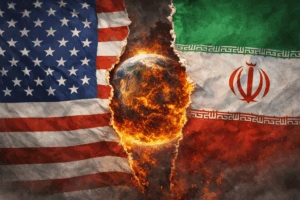
Tensions between the United States and Iran have escalated amid a flurry of statements and military movements, with former US President Donald Trump reportedly expressing surprise that Iran has not yielded to American pressure. Meanwhile, speculation about potential US military action against Iran has intensified, as officials and former intelligence officers weigh in on the likelihood of imminent strikes. The situation is further complicated by troop relocations in the Gulf region and ongoing debates over US foreign policy and economic measures.
Us Iran Relations Under Renewed Strain
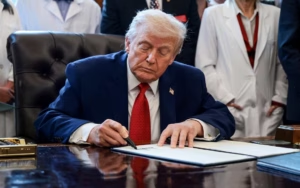
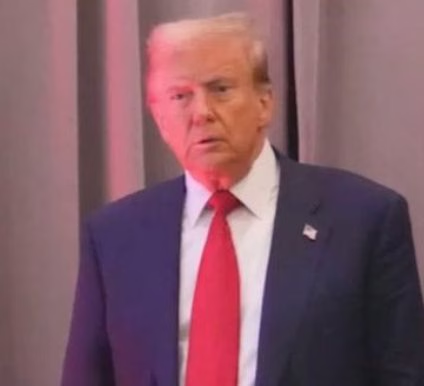
Recent remarks attributed to Donald Trump have drawn attention to the ongoing standoff between Washington and Tehran. According to diplomatic sources, Trump is “curious” as to why Iran has not “capitulated” under sustained US pressure. This sentiment reflects the broader frustration within some US political circles regarding the effectiveness of sanctions and diplomatic isolation.
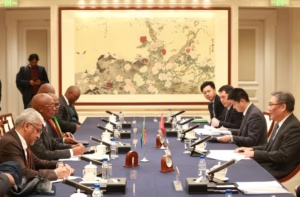
Amid these tensions, discussions between Iranian officials and international agencies continue, with nuclear negotiations remaining a focal point. The diplomatic landscape is further complicated by reports of Iran’s potential to rapidly advance its nuclear capabilities, raising concerns among Western governments.
Speculation Over Imminent Us Military Action
The possibility of a US strike on Iran has been amplified by statements from former intelligence officials. Former CIA officer John Kiriakou claimed,
”Decision made to attack Iran”
and suggested that a US military operation could be imminent. These assertions have not been officially confirmed, but they have contributed to a climate of uncertainty in the region.
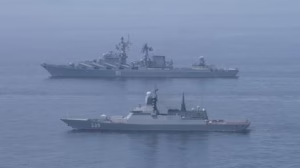
Military movements in the Gulf have added to the speculation. Reports indicate that US soldiers have been relocated from a major base in Qatar, while political allies of Trump have urged the administration to take decisive action. The shifting of troops is seen by some analysts as a precautionary measure, while others interpret it as preparation for possible conflict.
International Reactions And Regional Dynamics
The evolving situation has prompted responses from various international actors. The United Kingdom has reportedly not granted the US permission to use RAF bases for potential strikes on Iran, highlighting divisions among Western allies regarding military intervention. Meanwhile, Iran has condemned what it describes as “extremist rhetoric” from US officials, further inflaming diplomatic tensions.
Regional security is also being shaped by the activities of allied groups and neighboring countries. Reports suggest that Hezbollah, a key Iranian ally, is being managed by officers from Iran’s Islamic Revolutionary Guard Corps as it prepares for potential conflict with Israel or the US. These developments underscore the risk of a broader regional escalation if hostilities were to break out.
Economic Measures And Domestic Us Politics
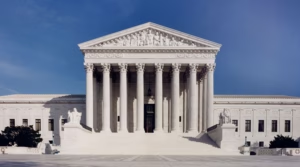
Economic policy remains a contentious issue in the US, with Trump’s tariff strategies facing legal and political challenges. The Supreme Court’s rejection of certain tariffs has raised questions about how companies will secure refunds, while critics have questioned the effectiveness of a proposed 15% global levy. Indian-origin lawyer Neal Katyal remarked,
‘If tariffs are such a good idea…’
challenging the rationale behind the administration’s approach.
Domestically, Trump has faced criticism over his handling of tariffs and foreign policy, with recent polls indicating declining approval ratings. Media outlets have described his recent actions as a “tariff tantrum,” and social media has reacted strongly to his statements and policy decisions. Despite these challenges, Trump continues to command significant attention on the international stage.
Broader Security Concerns In The Middle East
The heightened US-Iran tensions are occurring against a backdrop of wider instability in the Middle East. Airstrikes, proxy conflicts, and shifting alliances have contributed to a volatile security environment. In Lebanon, Israeli strikes have targeted Hezbollah positions, while in Afghanistan, Pakistani military operations have resulted in casualties and further unrest.
As diplomatic and military maneuvers continue, the risk of miscalculation remains high. Analysts warn that any escalation between the US and Iran could have far-reaching consequences for regional and global security, with multiple actors poised to respond to developments on the ground.