
Israel has launched what it described as a preemptive strike on Iran, triggering a nationwide state of emergency amid warnings of imminent retaliation. Israeli Defense Minister Israel Katz confirmed the operation in a statement carried by multiple local media outlets early on Saturday, saying the attack was carried out for national security reasons and aimed at neutralising what he characterised as direct threats against the state. Authorities immediately moved to prepare the population for possible missile and drone strikes, warning that counter attacks could follow within hours.
Katz said the objective was clear and defensive in nature, stating the operation sought
“to remove threats against the State of Israel,”
while cautioning citizens to brace for incoming fire. The declaration of a state of emergency across the country signalled the seriousness of the situation, with sirens expected to sound in major cities should Iranian forces respond. Civil defence protocols were activated and emergency services placed on heightened alert, as military officials indicated that aerial defence systems were fully mobilised.
Joint Operation With United States
A senior Israeli defence official disclosed to Channel 13 that the strikes were not conducted in isolation, describing the assault as
“this is a joint Israeli American attack”
that had reportedly been in preparation for months. The revelation confirmed long standing speculation of deep military coordination between Washington and Tel Aviv, particularly in light of escalating tensions surrounding Iran’s nuclear ambitions and regional activities. An unnamed United States official later confirmed to the Wall Street Journal that American forces were indeed participating in the operation.
The acknowledgement of direct American involvement adds a volatile dimension to an already combustible regional landscape. The strategic alignment suggests the operation was designed not only as a tactical strike but as a broader geopolitical message. For Iran, the participation of the United States could redefine the scope of any retaliation, potentially widening the conflict beyond bilateral confrontation. Defence analysts note that joint planning of this nature typically involves extensive intelligence sharing, target vetting and synchronised air and cyber operations.
Explosions Reported In Tehran
Footage broadcast by RT from Tehran showed two large plumes of smoke rising above the skyline of the Iranian capital, an image that immediately reverberated across global news networks. While Iranian authorities had not issued detailed casualty reports at the time of publication, Israeli Channel 12 claimed the operation targeted
“dozens of regime targets,”
with some unconfirmed reports suggesting that one of the strikes may have hit an Iranian presidential facility.
The scope of the targets indicates a broad strategic intent rather than a limited warning strike. If confirmed, attacks on high level political or military infrastructure would mark a significant escalation in Israel’s posture toward Tehran. Iranian officials have yet to publicly detail the extent of the damage, but state media has characterised the strikes as acts of aggression that will not go unanswered. The atmosphere in Tehran remains tense, with heightened security deployments reported across key government districts.
Airspace Closed As Region Braces
Within hours of the announcement, Israel’s Ministry of Transportation confirmed that the country’s airspace had been closed to civilian flights, citing immediate security concerns. In a brief statement, the ministry stressed that
“the safety and security of passengers are the top priority.”
The closure effectively halted commercial aviation traffic, stranding travellers and disrupting regional flight routes.
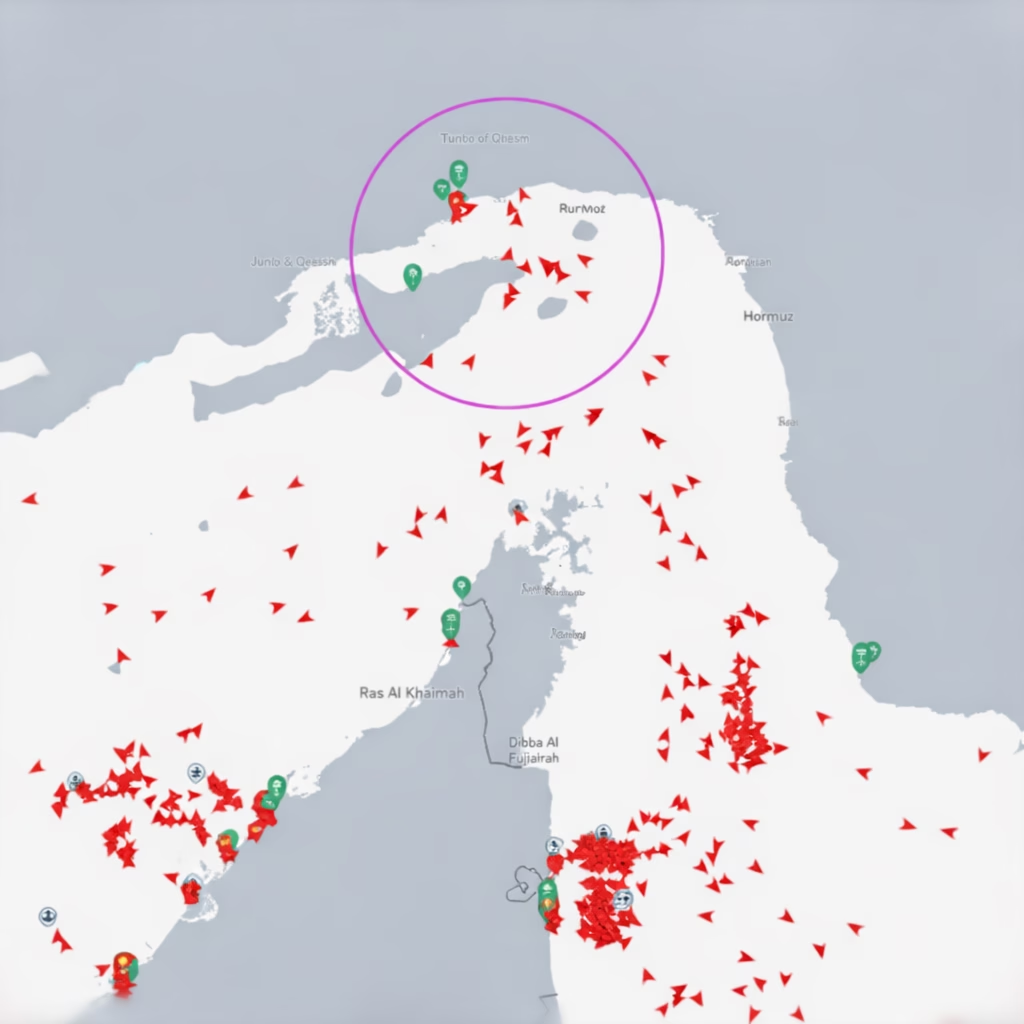
The precautionary measure reflects fears of retaliatory missile or drone strikes targeting population centres or strategic infrastructure. Regional airlines began rerouting aircraft to avoid Israeli and potentially Iranian airspace, while neighbouring countries monitored developments closely. Financial markets in the region reacted sharply in early trading, with energy prices edging upward amid concerns that sustained conflict could disrupt oil flows through key maritime corridors.
Nuclear Talks Collapse Days Before Strike
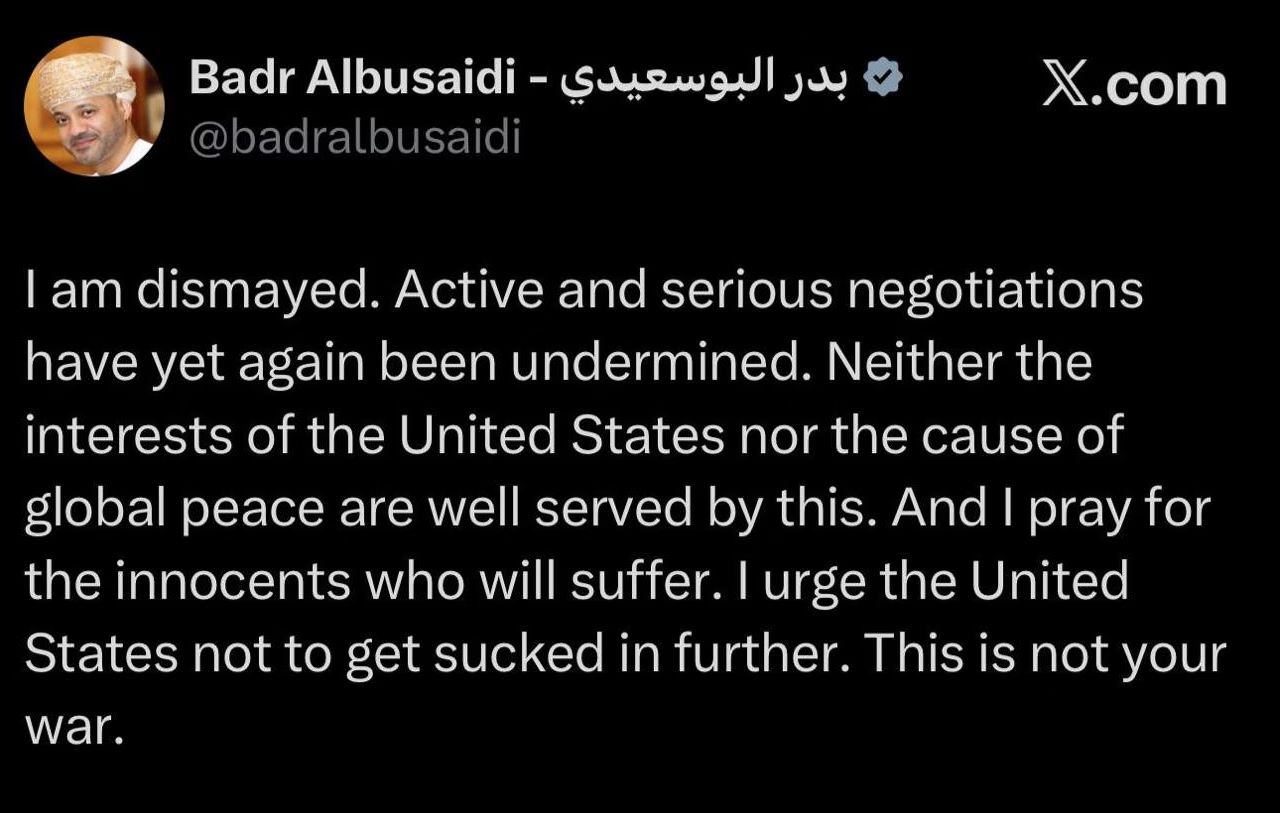
The timing of the operation is particularly striking, coming less than 48 hours after the latest round of talks between Iran and the United States over Tehran’s nuclear programme failed to produce a breakthrough. Washington had demanded that Iran dismantle its nuclear infrastructure, impose strict limits on its ballistic missile programme and cease support for regional allies. Tehran, however, insisted that negotiations should focus solely on nuclear issues and called for the lifting of international sanctions.
Iranian Foreign Minister Abbas Aragchi described the discussions as showing
“progress,”
but criticised what he labelled America’s
“excessive demands.”
US President Donald Trump responded by saying he was
“not happy with the fact that they [Iran] are not willing to give us what we have to have.”
The collapse of diplomacy, followed so swiftly by coordinated military action, signals a dramatic shift from negotiation to confrontation.
Second Major Campaign In A Year
This latest assault marks the second major Israeli military campaign against Iran in less than a year. During the 12 day war in June 2025, Israel carried out surprise attacks on Iranian military and nuclear facilities, killing senior commanders, officials and nuclear scientists. The United States later joined that conflict, striking three key nuclear sites including the deep underground enrichment facility at Fordow.
At the time, Washington claimed the Islamic Republic’s nuclear programme had been completely derailed, while Iranian officials rejected that assessment and maintained that their capabilities remained intact. The recurrence of direct strikes suggests that strategic objectives from the previous confrontation may not have been fully realised. With both sides now on heightened military footing and diplomatic channels effectively stalled, the region once again stands at a precarious crossroads, where miscalculation could ignite a far wider conflict.