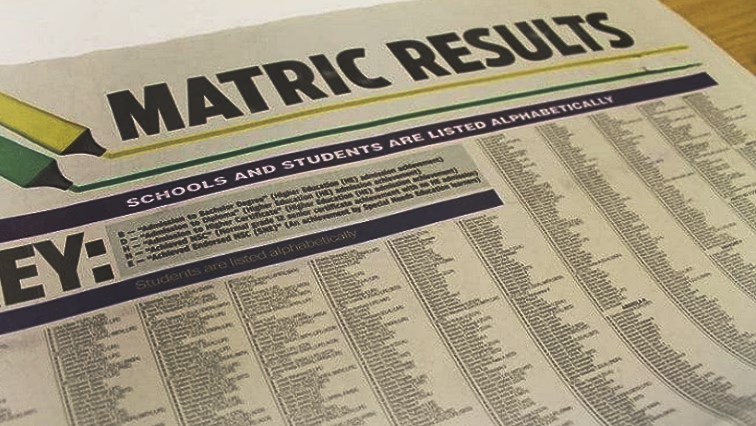
As the legal dispute over the publication of the 2024 matric results continues to unfold, learners awaiting their outcomes have been told they will still be able to access them through local newspapers. This confirmation has provided a measure of certainty to thousands of candidates who have been left anxious by the ongoing regulatory and court challenges surrounding the release of the results.
The Gauteng Department of Education confirmed this position publicly, stating that a decision had already been taken allowing newspapers to carry the results. The department’s stance signals confidence in the existing court ruling, despite renewed objections and legal manoeuvres from the Information Regulator.
Regulator Maintains Legal Objection
The Information Regulator has firmly maintained that the publication of matric results remains unlawful while its appeal process is pending. According to the regulator, the act of publishing results, even when limited to examination numbers, could still amount to a breach of the Protection of Personal Information Act.
The regulator has stressed that the filing of an application for leave to appeal effectively suspends the earlier court order. From its perspective, this means the prohibition on newspaper publication remains active until the matter is conclusively resolved by a higher court.
High Court Ruling Fuels Dispute
The current standoff stems from a Gauteng High Court ruling delivered in Pretoria in December, where three judges dismissed an application seeking to block publication of the results. The court ruled that results could be published provided learners were identified only by their examination numbers.
This judgment was welcomed by education authorities and several civil society groups, who argued that anonymised publication had been a long established practice and did not infringe on learner privacy. The ruling has since become the focal point of the regulator’s appeal.
Appeal Suspends Publication Order
The Information Regulator has taken the position that its appeal automatically suspends the High Court order that allowed publication. It has reiterated that its enforcement notice, which bars the Department of Basic Education from publishing results without consent, remains legally binding.
Explaining this position, the regulator emphasised that it is not merely opposing publication in principle but seeking clarity on how privacy law should be interpreted and applied in education related matters going forward.
“Since we filed the leave to appeal the Enforcement Notice, which states that the results cannot be published without our consent, it is still active.”
Department Issues Access Guidelines
Despite the legal uncertainty, the Department of Basic Education has already published official guidelines outlining how learners can access their results. These were shared publicly ahead of the scheduled release date to ensure candidates are not left without information.
The guidelines confirm that learners may access their results through newspapers using their examination numbers, via the department’s website with additional verification, through SMS services, or by collecting printed statements from schools and examination centres.
Civil Society Signals Court Action
The legal battle has drawn in civil society organisations, including AfriForum, which has warned that it may approach the courts urgently should the results not be published in newspapers. The organisation has argued that restricting access would unfairly prejudice learners, particularly those with limited digital connectivity.
This intervention underscores the broader public interest dimension of the dispute, with access to education outcomes framed as both a transparency issue and a matter of equity.
Wider Implications For Privacy Law
In its notice seeking leave to appeal, the Information Regulator argued that the case raises fundamental questions about how section 11 of the Protection of Personal Information Act should be interpreted. It said these questions are likely to arise repeatedly in future disputes.
The regulator has insisted that resolving these issues is necessary not only for the matric results matter but for broader regulatory certainty, noting that clear guidance is needed to balance privacy rights against long standing public interest practices.
“It is in the interests of justice and in the public interest to have those issues resolved.”