Israel’s Defence Minister Israel Katz set off a political and diplomatic storm after declaring that Israel would “never leave Gaza,” a statement that immediately reverberated across domestic politics and the international arena. Delivered during a ceremonial event marking the construction of new housing units in the occupied West Bank settlement of Beit El, the remarks carried both symbolic and strategic weight. By invoking permanence in Gaza, Katz touched a nerve in a conflict where language is scrutinised as closely as actions.
The timing of the statement amplified its impact. Israel is navigating a fragile ceasefire environment, shaped in part by international mediation efforts and a tentative peace framework backed by the United States. Against this backdrop, Katz’s words appeared to signal a dramatic departure from officially stated policy, raising concerns about Israel’s long term intentions in Gaza and the broader implications for regional stability.
Israeli Denials Becomes Apparent
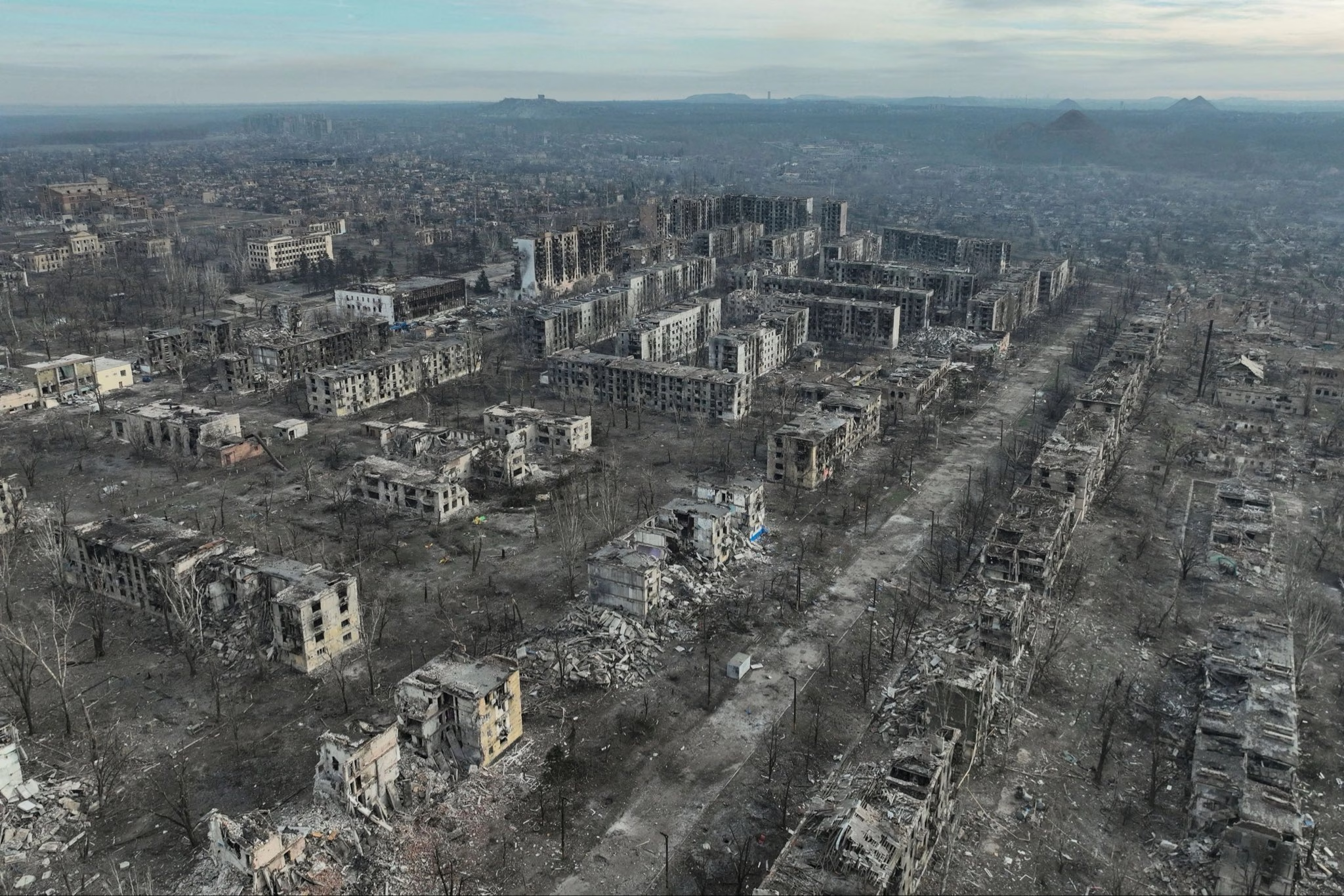
In his address, Katz went further than asserting an indefinite Israeli presence, openly musing about the re establishment of settlements in northern Gaza. He referenced Nahal outposts, a model that historically combined military presence with agricultural settlement and later evolved into permanent civilian communities. This language evoked memories of Israel’s pre 2005 presence in Gaza, when settlements were dismantled as part of a unilateral withdrawal.
The reference was not incidental. Nahal outposts have long been viewed by critics as precursors to permanent occupation, blurring the line between security measures and civilian settlement. By invoking this model, Katz appeared to reopen a chapter many believed had been closed, prompting fears that Gaza could once again become a site of entrenched settlement activity rather than a territory moving toward political resolution.
Clash With Official Government Policy
Katz’s remarks immediately stood in contrast to the position repeatedly articulated by Prime Minister Benjamin Netanyahu. The prime minister has maintained that Israel has no intention of resettling Gaza, framing military operations there strictly in terms of security rather than territorial ambition. This divergence exposed visible cracks within Israel’s leadership at a sensitive moment.
The comments also conflicted with the US backed peace framework that underpins the current truce. That plan explicitly states that Israel will not occupy or annex Gaza in future phases, envisioning a withdrawal as part of a broader settlement. Katz’s words, whether rhetorical or ideological, appeared to undermine those assurances, placing Israel at odds with its most influential international partner.
Domestic And International Backlash
Reaction to the statement was swift and severe. Political figures, security analysts, and former military leaders accused Katz of recklessness, arguing that such rhetoric could inflame tensions and weaken Israel’s diplomatic standing. Critics warned that statements suggesting permanent occupation risked alienating allies and emboldening adversaries at a time when restraint was strategically vital.
Former Israeli chief of staff Gadi Eisenkot publicly rebuked the defence minister, highlighting what he described as a contradiction between government actions and rhetoric.
“While the government votes with one hand in favor of the Trump plan, with the other hand it sells fables about isolated settlement nuclei in the Strip,”
The comment captured broader unease within Israel’s security establishment about mixed messaging during a critical phase of the conflict.
Rapid Backtracking And Damage Control
Facing mounting criticism, Katz moved quickly to soften his stance. His office issued a clarification asserting that the government has no intention of establishing settlements in the Gaza Strip. The statement emphasised that the defence minister’s comments were made solely within a security context, an attempt to reframe the remarks as strategic rather than ideological.
Despite the clarification, questions linger about the underlying intent and the impact already done. In a region where policy signals are closely monitored by allies and adversaries alike, even momentary deviations can carry lasting consequences. Katz’s backtracking may have eased immediate political pressure, but the episode has underscored the fragility of the current moment and the power of words to shape perceptions, escalate tensions, and complicate already delicate efforts toward stability.