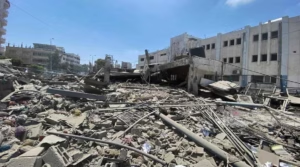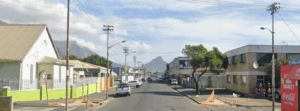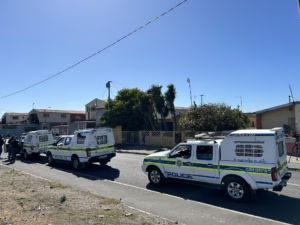
The Cape Flats has once again become the epicentre of a brutal surge in gun violence, with communities reeling after a weekend marked by repeated killings across multiple neighbourhoods. At least 34 people lost their lives in shootings since last Friday, a grim toll that reflects the persistent instability in parts of the Western Cape where gang activity and community violence remain deeply entrenched. The scale and pace of the killings have intensified public anxiety, particularly among residents who say the violence has become both unpredictable and inescapable.
The weekend bloodshed included a mass shooting at a tavern in Marikana, Philippi East, where eight people were killed in a single incident. Law enforcement authorities confirmed that the violence did not subside after the weekend, with further murders reported on Monday night, as well as the killing of an off duty police officer in Browns Farm. These events have reinforced perceptions that criminal networks continue to operate with confidence in densely populated areas, often striking in places meant for social gathering and respite.
President Responds To Public Fear
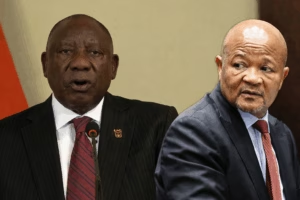
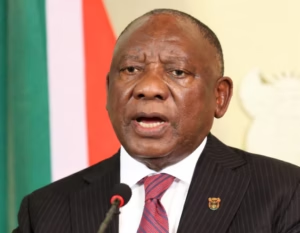
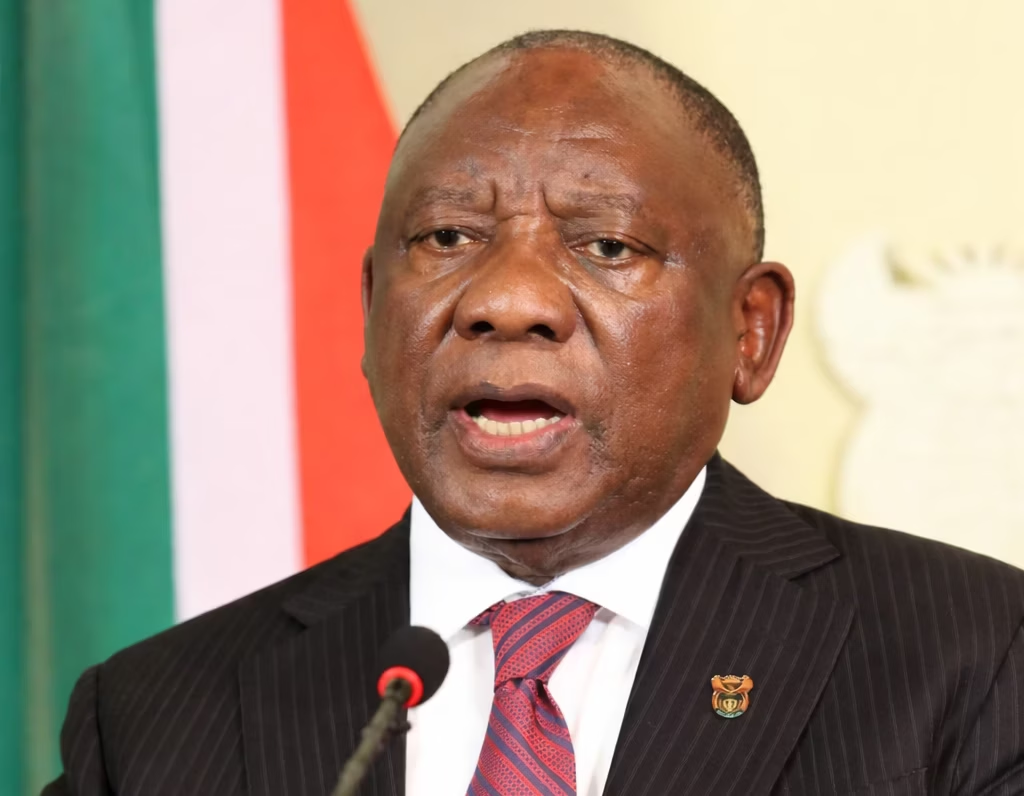
President Cyril Ramaphosa moved to address the unfolding crisis by publicly acknowledging the trauma experienced by affected communities. His response framed the violence not as isolated incidents but as part of a broader pattern that has left many residents fearful in their own homes. The President conveyed empathy for the families of the victims while signalling that the state could not remain passive in the face of such sustained bloodshed.
In a statement issued after the weekend killings, Ramaphosa said he was
“saddened at the loss of life in violence on the Cape Flats at the weekend”
and extended his
“deepest sympathies to all families and communities concerned”
. The language reflected both mourning and resolve, as public pressure continues to mount on national leadership to demonstrate that safety and security remain a core priority, particularly in communities long exposed to criminal violence.
Promise Of Stronger Law Enforcement
Central to the President’s response was a commitment to intensify policing efforts in the affected areas. The Cape Flats has frequently been the focus of targeted operations, yet residents often question their sustainability and long term impact. Ramaphosa’s remarks sought to reassure communities that the state would increase its presence and pursue a more stabilising approach rather than short term interventions.
The President said
“Communities could expect stronger law enforcement and increased police visibility to stabilise affected communities and reduce the potential for further violence”
. This pledge aligns with longstanding calls from community leaders who argue that visible policing can disrupt criminal activity, restore a measure of public confidence, and deter further attacks in neighbourhoods that have normalised the sound of gunfire.
Communities Urged To Work With Police
Beyond policing numbers and patrols, the Presidency emphasised the role of community cooperation in addressing the violence. Officials acknowledged that fear often prevents residents from engaging openly with law enforcement, especially in areas where retaliation is a constant risk. The call for partnership reflects an understanding that sustainable safety cannot be achieved through enforcement alone.
Presidential spokesperson Vincent Magwenya said
“The President recognises the fear to which criminals subject residents and therefore calls on communities to strengthen their partnership with law enforcement agencies in community policing forums”
. The statement highlights a push toward rebuilding trust between police and residents, a relationship that has been strained by years of violence, allegations of corruption, and perceptions of inadequate response.
Call For Information Even When It Is Personal
Perhaps the most challenging aspect of the President’s message was the direct appeal to residents to share information with authorities, even when it involves people close to them. In tightly knit communities, where social and family ties often overlap with criminal networks, such cooperation carries heavy emotional and social consequences. Yet officials argue that silence has only allowed violence to flourish.
Magwenya said
“The President also urges residents to provide information, even on neighbours and family members, to police on an ongoing basis so that communities will instead become unsafe for criminals”
. The statement reflects a stark reality facing many Cape Flats residents, where breaking the cycle of violence may require difficult choices, collective resolve, and sustained state support to ensure those who speak out are protected.