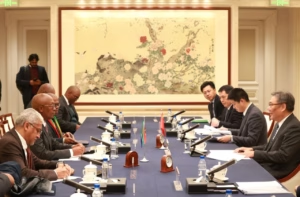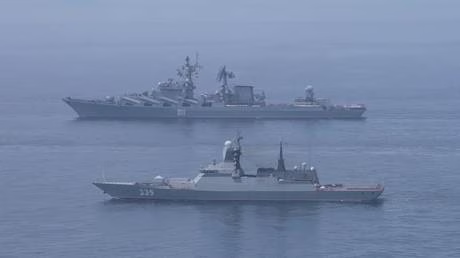
BRICS members are discussing the need for a strategic maritime dimension to strengthen security along global shipping lanes, especially in the face of Western actions that challenge sanctioned trade and sea control. Russian presidential aide Nikolai Patrushev has urged deeper cooperation among BRICS navies, arguing that coordinated patrols and joint drills can help protect vital routes. The remark comes as BRICS nations already conduct exercises and as maritime tensions flare in contexts of sanctions enforcement and great power rivalry.
Strategic Maritime Dimension BRICS
Patrushev contends that BRICS can unlock latent potential by giving maritime strategy a formal role, noting that the member states already engage in joint drills. He frames the expansion of naval cooperation as a response to risks facing sea lanes and as a means to balance influence in global maritime affairs. His position reflects a long term aim to align security trade and regional presence through a unified strategic framework and collective practical capability.
Joint Naval Exercises And Experience
Officials point to the Will for Peace 2026 exercises off the coast of Cape Town which involved Russia China and Iran along with the United Arab Emirates during January. Patrushev says that the BRICS navies have already conducted drills in January and February illustrating practical cooperation and the potential for broader collaborations. Analysts view these exercises as a signal that BRICS aims to move from rhetoric to operational maritime collaboration.
Global Shipping Lanes Security
Patrushev linked maritime security to the protection of routes used by global trade emphasising that Western measures have intensified pressure on shipping. He argues that a strategic maritime dimension would help BRICS safeguard sea lanes from what he described as Western tension and actions that affect the freedom of navigation. The discussion arrives amid reports of enforcement actions by the United States against vessels alleged to be linked to sanctioned trade and reflects broader concerns about rules and enforcement at sea.
Regional And International Partnerships
Russia China and Iran participated in joint exercises with the United Arab Emirates also taking part highlighting a diverse set of partners in BRICS influenced maritime security planning. Patrushev oversees the Russian Maritime Board and underlines that a coordinated approach would extend beyond traditional BRICS borders by incorporating regional allies and partners. The aim is to cultivate interoperability and shared standards that can support joint patrols information exchange and combined response mechanisms.
NATO Blockade Claims And Arctic Geopolitics
Moscow has criticised Western maritime actions as an attempt to blockade Russia’s access to the Baltic and Arctic routes. The Russian ambassador asserted that NATO allies seek an illegal blockade while the bloc is reportedly considering expanded naval presence around Greenland. The broader context includes discussions among Western officials about seizing ships connected to Russia and the Arctic strategic contest with the United States and its allies.
Strategic Implications For BRICS Maritime Strategy
The push for a formal maritime dimension signals a shift in how BRICS could shape international security architecture. By aligning navies harmonising training and developing shared doctrine BRICS could enhance its influence along critical sea lanes while presenting a united stance in multilateral maritime forums. Patrushev’s comments underscore a move from cooperative rhetoric to a structured maritime policy that could affect trade diplomacy and geopolitical calculations for years to come.