
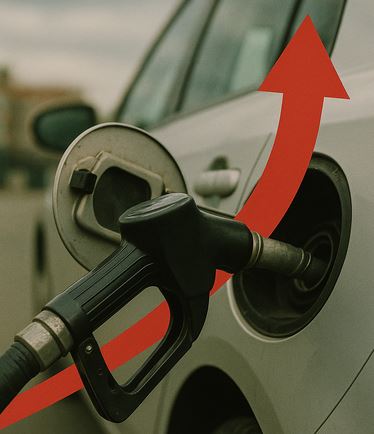
South African drivers are bracing for higher fuel costs from Wednesday, March 4, as month-end data signals the end of a four-year low in petrol and diesel prices.
The Central Energy Fund figures point to petrol increases of 21 cents for 95 Unleaded and 18 cents for 93 Unleaded. Diesel is set for a sharper rise, with 500ppm climbing 62 cents and 50ppm increasing by 65 cents per litre. At the coast, 95 Unleaded will retail around R19.48, while Gauteng motorists will pay approximately R20.31.
The cheaper 93 Unleaded will cost about R20.17 in the inland province. Wholesale 50ppm diesel is expected to reach R17.84 at the coast and R19.17 inland.
“While inflationary tax adjustments may be defensible in principle, simply allocating more funding to the RAF does little to address its deep-rooted inefficiencies,”
These projections remain subject to final confirmation by the Department of Mineral and Petroleum Resources early this week, as they are derived from unaudited data.
International Markets Drive Increases
The upward pressure on local fuel prices originates primarily from elevated international product prices recorded throughout February. Global markets have experienced volatility that has filtered through to South African importers.
A stronger rand has provided some cushioning for consumers. Without the currency’s recent firming, petrol prices could have jumped by roughly 35 cents per litre. Diesel might have surged by nearly 80 cents, more than double the current projected increase. This exchange rate buffer has offered temporary respite, though it has not eliminated the need for adjustments entirely.
The complex interplay between global oil markets and domestic currency strength continues to shape what drivers pay at the pump, with external factors largely dictating the monthly fluctuations.
April Brings Additional Tax Burden
Further financial strain awaits motorists in April, with multiple factors converging to push prices higher. International oil markets have already spiked in early March due to escalating conflict in the Middle East, creating immediate uncertainty around import costs.
Domestic tax adjustments will compound these pressures. Finance Minister Enoch Godongwana’s 2026 Budget Speech confirmed increases to fuel levies effective April 1. The General Fuel Levy will rise by 9 cents for petrol and 8 cents for diesel. The carbon fuel levy increases by 5 cents for petrol and 6 cents for diesel. The Road Accident Fund levy climbs a further 7 cents across both fuel types.
Combined, these tax adjustments add 21 cents per litre to fuel costs. Post-implementation, drivers will contribute R2.25 per litre to the RAF alone. The General Fuel Levy on petrol will reach R4.10 per litre.
“While inflationary tax adjustments may be defensible in principle, simply allocating more funding to the RAF does little to address its deep-rooted inefficiencies,”
Automobile Association CEO Bobby Ramagwede cautioned that inflation-linked increases would squeeze households already navigating tight budgets. He noted that the Minister missed an opportunity to reduce mobility costs and stimulate broader economic activity through meaningful consumer relief.