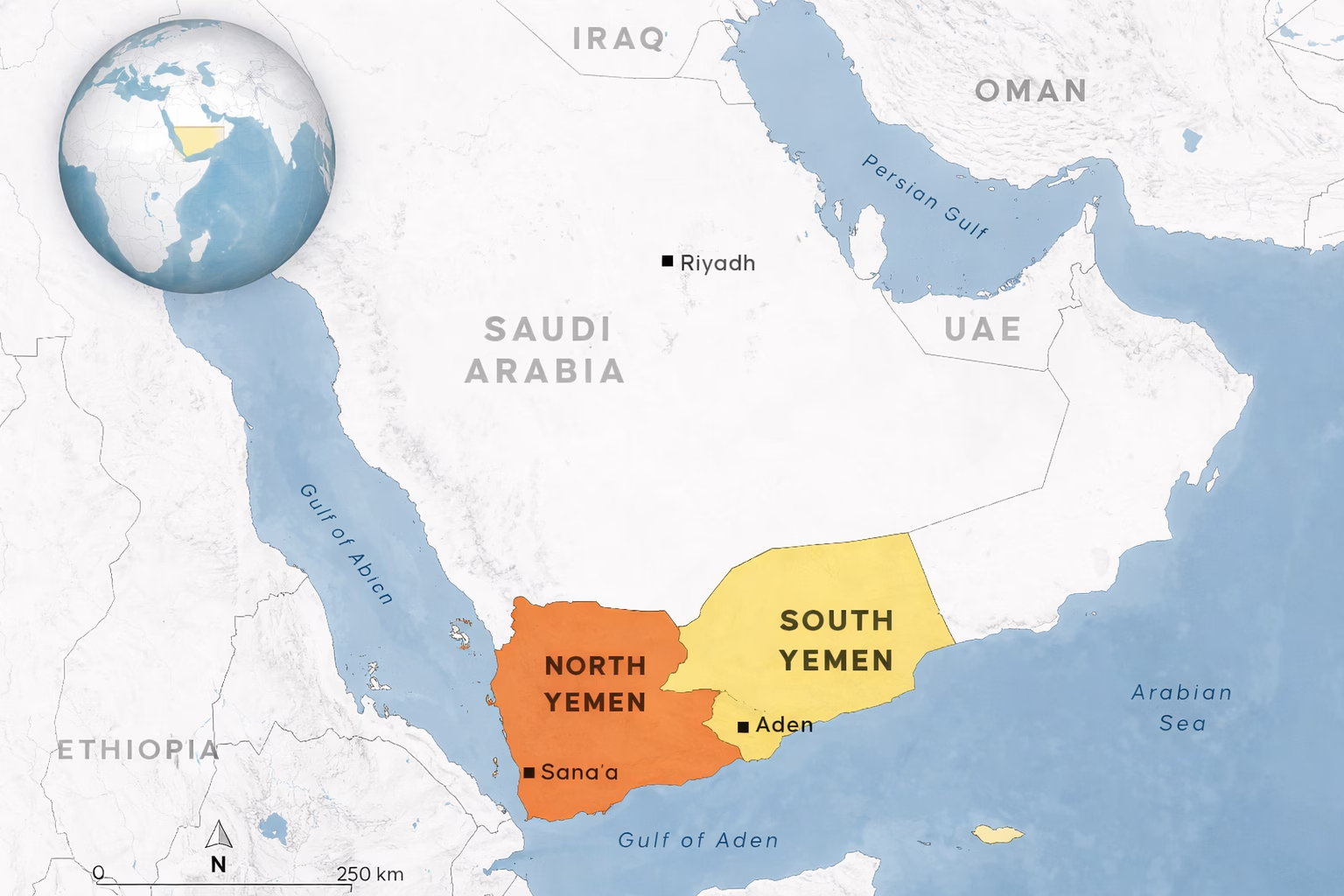
A Saudi-led military coalition has launched what it described as a limited airstrike on Yemen’s key southern seaport of Mukalla, intensifying already volatile tensions between former allies in the country’s long-running conflict. The strike targeted what the coalition claimed was an illicit weapons shipment arriving by sea, allegedly destined for a powerful separatist faction backed by the United Arab Emirates. Mukalla, located in Hadramout province, is the only operational seaport in the region and plays a critical role in trade and security along Yemen’s southern coastline.
The coalition said the operation was conducted at the request of Yemen’s internationally recognised leadership and was aimed at preventing the delivery of heavy military equipment that could further destabilise the country. Saudi officials insisted the strike caused no civilian casualties or damage to surrounding infrastructure, framing it as a defensive action taken to protect Yemen’s sovereignty and regional stability.
Claims Of Covert Weapons Delivery
According to a statement carried by Saudi state news agency SPA, coalition forces tracked two vessels that arrived in Mukalla over the weekend from the UAE port of Fujairah. The ships allegedly entered Yemeni waters without authorisation, disabled their tracking systems, and proceeded to offload combat vehicles and weapons. The coalition said the equipment was intended to bolster the Southern Transitional Council, a separatist movement seeking self-rule in southern Yemen.
#Statement | Pursuant to the statement issued by the Ministry of Foreign Affairs on 25/12/2025 corresponding to 5/7/1447 regarding the Kingdom’s concerted efforts, working with the brotherly United Arab Emirates, to end and contain the escalatory steps taken by the Southern… pic.twitter.com/lTyU0gLgpf
— Foreign Ministry 🇸🇦 (@KSAmofaEN) December 30, 2025
Saudi officials asserted that the shipment represented a direct breach of Yemen’s security arrangements and undermined the authority of the central government. The coalition maintained that the targeted equipment had already been unloaded when the airstrike was carried out in the early hours of Tuesday, framing the attack as precise and narrowly focused.
The strike targeted weapons and combat vehicles unloaded from ships arriving from the UAE and was carried out without casualties or collateral damage
A similar accusation made by Sudan regarding the UAE weapons deliveries to anti-government forces responsible for killing thousands of civilians in Sudan. See article ‘UAE Reported to Deliver Weapons to Israel in Secretive Operation‘.
Fractured Alliances In A Protracted War
The Southern Transitional Council was originally aligned with the Saudi-led coalition after the outbreak of Yemen’s civil war in 2014, when the alliance intervened to counter Houthi rebels who had seized the capital Sanaa. Over time, however, the STC shifted its focus toward autonomy for southern Yemen, bringing it into conflict with the Saudi-backed government it once supported.
Since 2022, the STC has consolidated control over large parts of southern Yemen under a fragile power-sharing arrangement. Its expansion into strategically sensitive areas such as Hadramout and Mahrah, both bordering Saudi Arabia, has heightened Riyadh’s concerns over border security and regional influence.
Escalating Political And Military Fallout
In response to the strike, Yemen’s Presidential Leadership Council head Rashad al Alimi declared a sweeping state of emergency, introducing a temporary nationwide blockade and taking the extraordinary step of cancelling a security pact with the UAE. His televised address signalled a dramatic escalation in rhetoric, portraying the separatist advance as a direct challenge to state authority.
Al Alimi also ordered the STC to relinquish territory to Saudi-backed forces and demanded the withdrawal of UAE troops from Yemen. His statements underscored the growing rift between Riyadh and Abu Dhabi, once close partners in the Yemeni intervention.
This advance represents an unacceptable rebellion against the Yemeni state and its legitimate institutions
Regional Tensions And Security Warnings
Saudi Arabia issued a stark warning that continued UAE support for southern separatists constituted a threat to the Kingdom’s national security and to stability across Yemen and the wider region. The language marked a rare public rebuke between Gulf allies, reflecting the depth of the dispute triggered by the events in Mukalla.
The UAE’s foreign ministry did not immediately respond to the allegations, leaving unanswered questions about Abu Dhabi’s role and intentions. The developments follow reports of earlier Saudi air operations against separatist positions in Hadramout, suggesting a broader shift in the balance of power among Yemen’s anti-Houthi forces.
Emergency Measures And Timelines
The Yemeni leadership’s response included a series of emergency measures with strict timeframes, reflecting the urgency and severity of the crisis. These measures aim to reassert state control while applying diplomatic and military pressure on both the separatists and their alleged external backers.
The timelines announced by President Al Alimi have become central to the unfolding confrontation, setting clear deadlines that could shape the next phase of Yemen’s conflict if they are enforced.
| Measure | Duration |
|---|---|
| State Of Emergency | 90 Days |
| Air Sea And Land Blockade | 72 Hours |
| Demand For UAE Withdrawal | 24 Hours |